The Rise of Agentic AI in Code Review: What Engineering Teams Need to Know
Discover how agentic AI is revolutionizing code review processes, from automated quality scoring to intelligent feedback generation for engineering teams.

Jay Derinbogaz
Founder
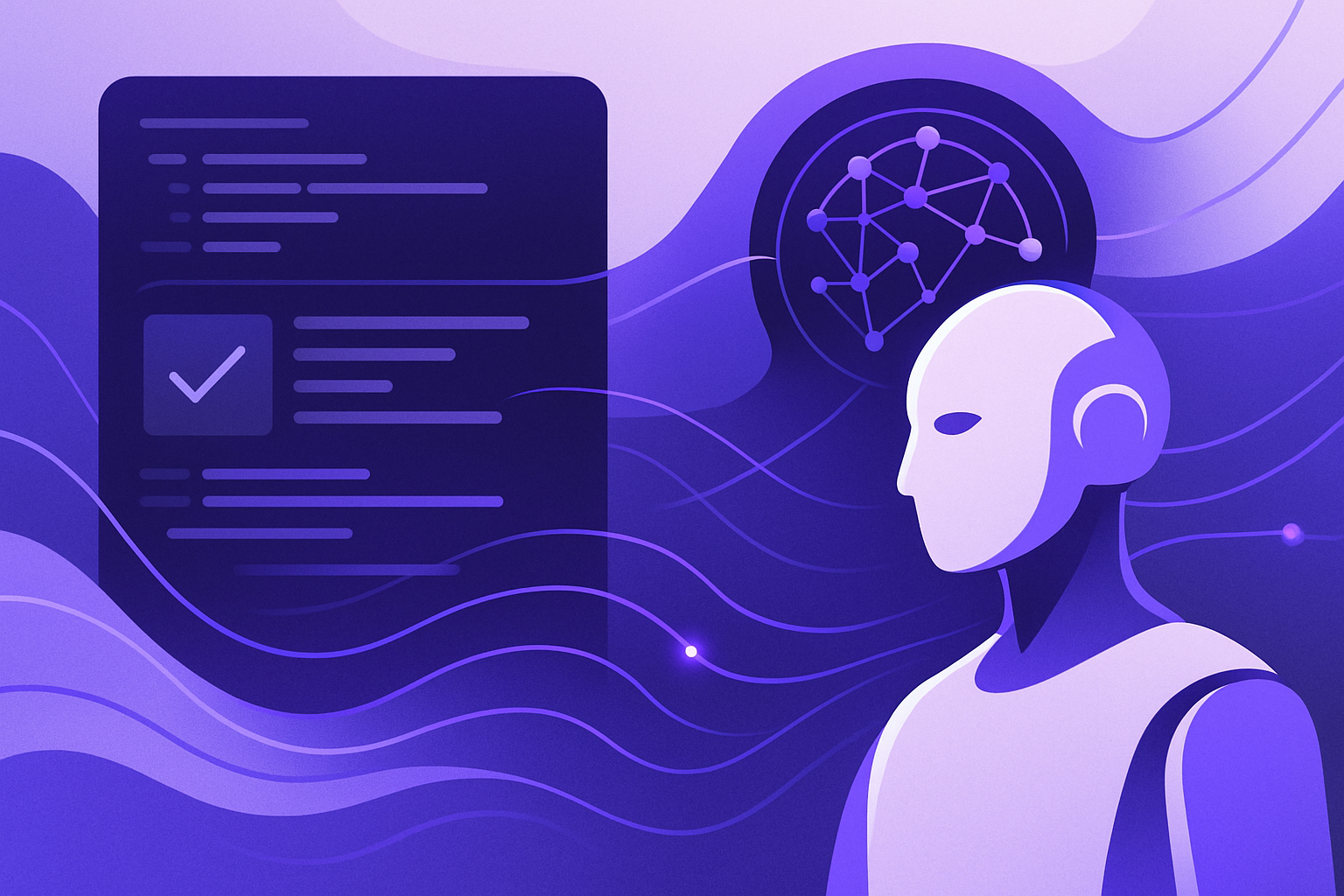
The software development landscape is experiencing a seismic shift. While traditional AI tools have helped developers write code faster, a new category of artificial intelligence is emerging that promises to fundamentally transform how we review, evaluate, and improve code quality: agentic AI.
Unlike conventional AI that simply responds to prompts, agentic AI systems can autonomously plan, execute complex tasks, and make decisions based on context and goals. In the realm of code review, this represents a leap from basic linting tools to intelligent systems that can understand code intent, architectural patterns, and team-specific quality standards.
Understanding Agentic AI in Development Workflows
Agentic AI differs from traditional AI in three key ways:
- Autonomy: It can work independently without constant human guidance
- Goal-oriented behavior: It understands objectives and works toward achieving them
- Contextual decision-making: It adapts its approach based on the specific situation
In code review, this translates to systems that don't just flag syntax errors but actually understand what your code is trying to accomplish and whether it achieves those goals effectively.
The Current State of Code Review Challenges
Before diving into how agentic AI addresses these issues, let's examine the pain points most engineering teams face today:
Review Bottlenecks
- Senior developers become review bottlenecks as teams scale
- Context switching between reviews disrupts deep work
- Inconsistent review quality across different reviewers
Quality Inconsistencies
- Subjective feedback that varies between team members
- Important issues missed due to reviewer fatigue
- Lack of standardized criteria for what constitutes "good" code
Time and Resource Drain
- Average PR review time ranges from 2-8 hours across teams
- Multiple review cycles for complex changes
- Documentation and knowledge sharing overhead
How Agentic AI Transforms Code Review
1. Intelligent Quality Scoring
Agentic AI systems can evaluate pull requests across multiple dimensions simultaneously:
- Code Quality: Complexity, maintainability, and adherence to patterns
- Security: Vulnerability detection and secure coding practices
- Performance: Efficiency analysis and optimization opportunities
- Team Standards: Consistency with established conventions and architecture
Platforms like GitRank leverage Claude AI to provide comprehensive PR scoring that goes beyond traditional metrics, offering teams a standardized way to measure and improve code quality.
2. Contextual Feedback Generation
Instead of generic suggestions, agentic AI provides feedback that considers:
- Your codebase's existing patterns and architecture
- Team-specific coding standards and preferences
- The business context and requirements of the feature
- Historical decisions and their outcomes
3. Automated Review Orchestration
Agentic AI can manage the entire review workflow:
1. Initial automated assessment and scoring
2. Routing to appropriate human reviewers based on expertise
3. Generating preliminary feedback for reviewer consideration
4. Tracking review progress and escalating when needed
5. Learning from human feedback to improve future assessments
Implementation Strategies for Engineering Teams
Start with Pilot Programs
Begin by implementing agentic AI for specific types of reviews:
- Low-risk changes: Documentation updates, configuration changes
- Routine patterns: CRUD operations, standard API endpoints
- Security-focused reviews: Authentication, data handling, permissions
Establish Clear Guidelines
Define what your team expects from agentic AI:
| Aspect | Human Responsibility | AI Responsibility |
|---|---|---|
| Architecture decisions | ✓ Primary | Supporting analysis |
| Code style/formatting | Supporting review | ✓ Primary |
| Security vulnerabilities | Final approval | ✓ Detection & flagging |
| Business logic | ✓ Validation | Pattern consistency |
| Performance optimization | Strategic decisions | ✓ Opportunity identification |
Measure and Iterate
Track key metrics to evaluate the impact:
- Review cycle time: From PR creation to merge
- Quality indicators: Post-deployment bugs, security incidents
- Developer satisfaction: Survey feedback on review experience
- Knowledge sharing: How well context is preserved and transferred
Benefits Beyond Traditional Code Review
Developer Recognition and Growth
Agentic AI enables more sophisticated developer recognition systems. Instead of just counting commits or lines of code, it can:
- Recognize high-quality contributions across different skill levels
- Identify developers who consistently write maintainable code
- Highlight innovative solutions and architectural improvements
- Track improvement over time with personalized feedback
Engineering Analytics
Teams gain unprecedented insights into their development processes:
- Code quality trends over time and across projects
- Review effectiveness and bottleneck identification
- Team skill development and knowledge gap analysis
- Technical debt accumulation and remediation opportunities
Addressing Common Concerns
"Will AI Replace Human Reviewers?"
The goal isn't replacement but enhancement. Agentic AI handles routine analysis, freeing humans to focus on:
- Strategic architectural decisions
- Complex business logic validation
- Mentoring and knowledge transfer
- Creative problem-solving discussions
"How Do We Maintain Code Quality Standards?"
Agentic AI actually improves consistency by:
- Applying standards uniformly across all reviews
- Learning from your team's historical decisions
- Providing detailed explanations for its assessments
- Enabling easy customization of quality criteria
"What About Privacy and Security?"
Modern agentic AI platforms address these concerns through:
- On-premises deployment options
- Encrypted data transmission and storage
- Configurable data retention policies
- Audit trails for all AI decisions and access
The Future of Agentic AI in Development
As agentic AI continues to evolve, we can expect:
Advanced Pattern Recognition
- Understanding of complex architectural patterns
- Detection of anti-patterns before they become technical debt
- Suggestion of optimal refactoring strategies
Predictive Quality Assessment
- Forecasting potential issues before code reaches production
- Identifying components likely to require future maintenance
- Recommending proactive improvements
Cross-Team Learning
- Sharing best practices across different teams and projects
- Identifying successful patterns for broader adoption
- Building organizational knowledge repositories
Getting Started with Agentic AI Code Review
1. Assess Your Current State
- Audit your existing code review process
- Identify the biggest pain points and bottlenecks
- Measure baseline metrics for comparison
2. Choose the Right Platform
Look for solutions that offer:
- Integration with your existing tools (GitHub, GitLab, etc.)
- Customizable quality criteria and scoring
- Clear explanations for AI decisions
- Strong security and privacy protections
3. Plan Your Rollout
- Start with a small team or specific project type
- Gather feedback and iterate on configuration
- Gradually expand to more teams and use cases
- Continuously monitor and optimize performance
Conclusion
The rise of agentic AI in code review represents more than just another tool in the developer's toolkit—it's a fundamental shift toward more intelligent, consistent, and scalable development processes. By understanding code intent, learning from team patterns, and providing contextual feedback, agentic AI enables engineering teams to maintain high quality standards while moving faster than ever before.
The key to success lies not in viewing agentic AI as a replacement for human judgment, but as a powerful amplifier of human expertise. Teams that embrace this technology thoughtfully, with clear guidelines and measurable goals, will find themselves better equipped to handle the challenges of modern software development.
As the technology continues to mature, early adopters will have a significant advantage in building more efficient, higher-quality development workflows. The question isn't whether agentic AI will transform code review—it's whether your team will be ready to harness its potential.
Ready to explore how agentic AI can transform your code review process? Check out our guides on Setting Up Automated PR Scoring and Building High-Performance Engineering Teams.
Ready to improve your engineering metrics?
Start measuring developer productivity with AI-powered PR analysis. Free for open source projects.
Try GitRank FreeRelated Posts
How to Measure AI Coding ROI From Merged Pull Requests
Measure AI coding ROI with merged pull request outcomes, review flow, quality evidence, and component impact instead of adoption counts and code volume alone.
AI Coding Tools in 2026: Impact, Adoption, and Best Practices
Explore how AI coding tools are transforming software development in 2026. Learn adoption strategies, best practices, and real-world impact on team productivity.
AI Code Review vs PR Impact Scoring: What Each Tool Measures
AI code review finds risks before merge. PR impact scoring explains shipped work after merge. Learn where each belongs in an engineering workflow.